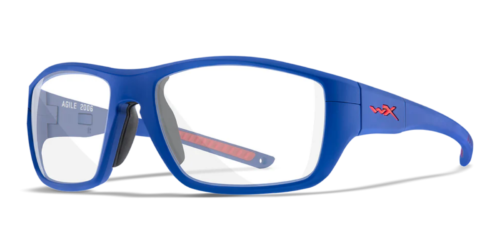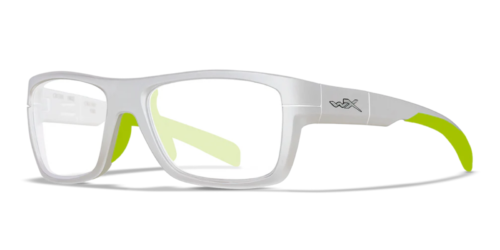

OSHA’s eye and face protection rule for general industry is 29 CFR 1910.133. It is only a few paragraphs long, yet it answers the questions that come up on every job site: when safety glasses are mandatory, whether side shields are required, what the glasses have to be rated to, how employees who wear prescription lenses are covered, and who pays for them. This post walks through the rule as written and adds the practical detail the rule leaves out.
When eye protection is required: 1910.133(a)(1)
The employer must ensure that each affected employee uses appropriate eye or face protection when exposed to eye or face hazards from:
- flying particles
- molten metal
- liquid chemicals
- acids or caustic liquids
- chemical gases or vapors
- potentially injurious light radiation
Two words carry the weight here. Ensure means the duty sits with the employer, not the worker; it is not enough to make glasses available. Appropriate ties the choice of protection to the hazard, which is why the companion rule, 1910.132(d), requires a written hazard assessment of each workplace before PPE is selected.
Side shields: 1910.133(a)(2)
Where there is a hazard from flying objects, the employee must use eye protection with side protection. The rule explicitly allows detachable side protectors, so clip-on or slide-on shields that meet the standard are acceptable. That is the basis for our side shields range, which is mostly model-specific shields for Pentax, Hudson and ArtCraft frames. Permanent, moulded side protection, as on the OnGuard 220S or the Pentax ZT400, satisfies the same requirement with nothing to lose.
Prescription wearers: 1910.133(a)(3)
Employees who wear prescription lenses while exposed to eye hazards must wear eye protection that either incorporates the prescription in its design, or can be worn over the prescription lenses without disturbing the position of either pair. In plain terms there are two compliant options:
- Prescription safety glasses: a Z87-2 rated frame with Z87-2 rated prescription lenses, which is what the prescription safety glasses on this site are. One pair does both jobs.
- Fitovers or goggles over regular glasses: acceptable as long as they sit properly over the glasses. Our guide to over-glasses safety glasses explains the fit problems to watch for.
Ordinary prescription glasses on their own do not satisfy this paragraph, even with polycarbonate lenses, because the frame is untested and there is no side protection.
Markings and the standard: 1910.133(a)(4) and (b)
Protectors must be distinctly marked to identify the manufacturer, and protective eye and face devices must comply with ANSI/ISEA Z87.1. The rule lists the 2010, 2003 and 1989 (R-1998) editions by name; OSHA has stated that devices meeting later editions are acceptable because they provide equal or greater protection. The practical check is simple: find Z87 or Z87+ on the frame and on each lens. Our guide to Z87 vs Z87+ markings explains what each grade was tested against.
Welding and radiant energy: 1910.133(a)(5)
Employees exposed to injurious light radiation must use filter lenses with a shade number appropriate for the work. The rule includes a table of minimum shade numbers by process and amperage, from shade 3 for light torch brazing up to shade 14 for carbon arc welding. Shades are marked on the lens as W followed by the number.
Who pays: 1910.132(h)
Payment is covered by the general PPE rule rather than the eye protection rule. 1910.132(h)(1) requires the employer to provide required PPE at no cost to the employee. Paragraph (h)(2) then carves out an exception that matters for eyewear:
The employer is not required to pay for non-specialty prescription safety eyewear, provided that the employer permits such items to be worn off the job site.
So an employer that lets you wear your prescription safety glasses outside work does not have to pay for them, while specialty items it requires to stay on site, such as sealed goggles or welding shields, remain the employer’s cost. Many employers pay for prescription safety eyewear anyway, usually through a program with set frame allowances, because it is cheaper than injuries and simpler to manage.
If you run a program like that, or want one, the corporate side of this business at safetyeyeguard.com handles employer-paid prescription safety eyewear, including the industry-specific programs and a free eyewear policy template.
Construction, shipyards and other sectors
General industry is 1910.133. Construction work falls under 29 CFR 1926.102, which carries the same hazard list, the same ANSI Z87.1 requirement, side protection for flying objects, and the same treatment of prescription wearers. Maritime and agriculture have their own parts, written along the same lines. If your site mixes sectors, the stricter reading of the two rules is the safe one.
A practical compliance checklist
| Question | What the rule requires | What to check on the eyewear |
|---|---|---|
| Is eye protection needed here? | Yes if the hazard assessment lists any of the six hazards | The written assessment under 1910.132(d) |
| What rating? | ANSI Z87.1; appropriate for the hazard | Z87 or Z87+ on frame and lenses; D3 for splash; W shade for welding |
| Side shields? | Required for flying-object hazards; detachable allowed | Permanent or clip-on shields that fit the frame |
| Prescription wearers? | Rx incorporated, or protection worn over the glasses | Z87-2 frame with Z87-2 lenses, or a proper fitover |
| Who pays? | Employer, except non-specialty Rx eyewear allowed off site | Your company policy or eyewear program |
Frames that cover the common cases
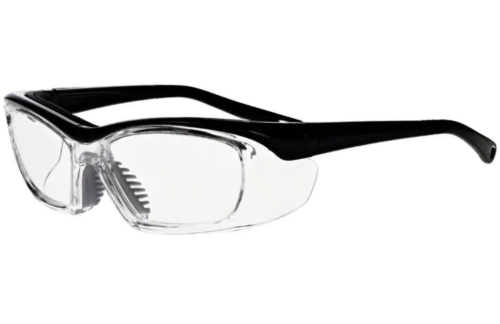
For general industrial work, the Pentax ZT400 is a non-conductive wrap with integrated side protection; the OnGuard 220S is a nylon wrap rated Z87+ and CSA Z94.3; the Hudson Optical H3 is a budget non-conductive frame; and the ArmouRx 7003 is a metal frame with removable or permanent side shields. All four are prescription-ready through the Select Lens button on the product page.
Shop the picks
-
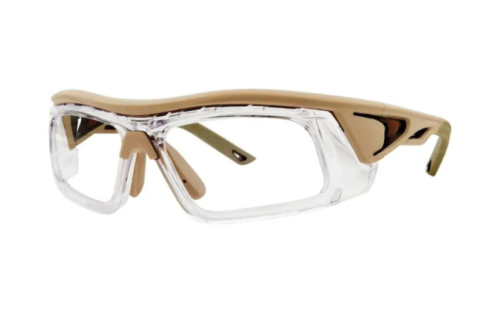 Pentax ZT400 Safety Glasses$57.00
-
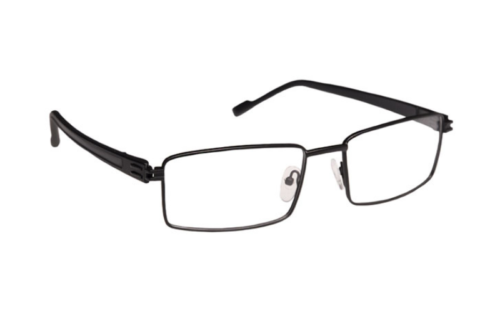 ArmouRx 7003 Safety Glasses$65.00
-
-
Frequently asked questions
Does OSHA require safety glasses?
Yes, when employees are exposed to eye hazards: flying particles, molten metal, liquid chemicals, acids or caustic liquids, chemical gases or vapors, or injurious light radiation. The employer decides which jobs involve those hazards through a written hazard assessment under 1910.132(d), and must then ensure protection is used.
What standard do OSHA safety glasses have to meet?
ANSI/ISEA Z87.1. The rule lists the 2010, 2003 and 1989 editions, and OSHA has accepted eyewear made to newer editions because it provides equal or better protection. Look for Z87 or Z87+ on the frame and the lenses.
Does OSHA require side shields?
Yes, whenever there is a hazard from flying objects. The rule allows detachable side protectors, such as clip-on or slide-on shields, as long as they meet the standard.
Does OSHA require employers to provide prescription safety glasses?
The employer must ensure prescription wearers have compliant protection, either glasses that incorporate the prescription or protection worn over them. On payment, 1910.132(h)(2) says the employer is not required to pay for non-specialty prescription safety eyewear if it allows the eyewear to be worn off the job site. Many employers pay anyway through an eyewear program.
What is the OSHA standard for safety glasses in construction?
Construction work is covered by 29 CFR 1926.102, which carries the same requirements: protection against the listed hazards, ANSI Z87.1 compliance, side protection for flying objects, and provisions for prescription wearers.