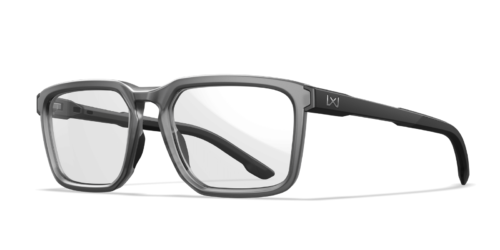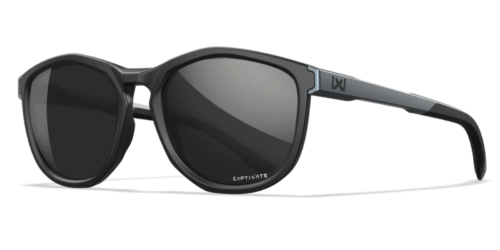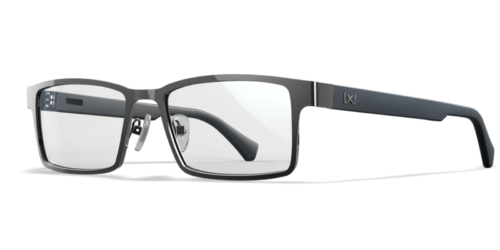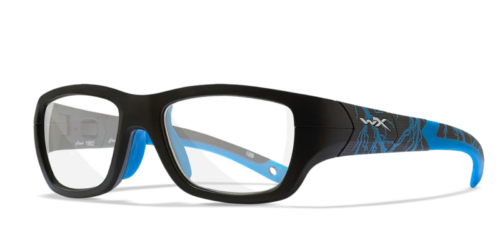
Veterans Day is a good week to explain the two ratings that get mixed up most often in tactical eyewear: the ANSI Z87+ high-impact mark that every industrial safety frame carries, and the MIL-PRF-32432 ballistic standard the U.S. military writes into its eyewear contracts. They are not the same test, they are not the same level of protection, and only one of them is on most safety glasses. This guide sets them side by side and lists the Wiley X frames on this site that carry both.
Z87+ in one paragraph
Z87+ is the high-impact grade of ANSI/ISEA Z87.1, the occupational standard OSHA requires. To earn it, the frame and lens together must survive a 500 g pointed weight dropped from about 50 inches and a quarter-inch (6.35 mm) steel ball fired at 150 ft/s (45.7 m/s), without cracking, chipping or letting the lens out of the frame. Our guide to Z87 vs Z87+ markings covers the whole marking system; for this post, remember the number: 150 ft/s.
MIL-PRF-32432 in one paragraph
MIL-PRF-32432 is the U.S. Department of Defense performance specification for military combat eye protection. Its headline test is ballistic fragmentation. Spectacles are shot with a 0.15-caliber, 5.8-grain T37 fragment simulator at roughly 640 to 660 ft/s; goggles with a 0.22-caliber, 17-grain fragment at roughly 550 to 560 ft/s. The lens must not be penetrated or cracked through, and the frame must hold it. The specification also sets optical quality, field of view, chemical and environmental resistance, and compatibility with helmets and other gear. Eyewear that passes is eligible for the Army’s Authorized Protective Eyewear List (APEL).
The two tests side by side
| ANSI Z87+ (high impact) | MIL-PRF-32432 (ballistic) | |
|---|---|---|
| Who writes it | ANSI / ISEA (industry standard) | U.S. Department of Defense |
| Projectile, spectacles | 6.35 mm steel ball | 0.15 cal, 5.8 grain fragment simulator |
| Velocity, spectacles | 150 ft/s (45.7 m/s) | about 650 ft/s (198 m/s) |
| Projectile, goggles | 6.35 mm steel ball at 250 ft/s | 0.22 cal, 17 grain fragment at about 550 ft/s |
| Drop test | 500 g pointed weight from about 50 in | Not the focus; impact is by projectile |
| Marking | Z87+ on frame and lens | Listed on the product; APEL listing where approved |
| Required by | OSHA for workplace hazards | Military and many law-enforcement contracts |
| Typical frames | All industrial safety glasses | Tactical and shooting frames |
The velocities are the point. A ballistic lens is tested at more than four times the speed of a Z87+ lens, with a projectile shaped to cut rather than a smooth ball. That is why ballistic eyewear is thicker, why it costs more, and why it is overkill for a woodshop but the right answer at a range, in the field, or anywhere brass, ricochet fragments and debris move fast.
Does ballistic mean bulletproof?
No. The standard is about fragments, not bullets. No eyewear stops a direct round, and no manufacturer claims it does. What ballistic eyewear does is stop the secondary hazards that cause most eye injuries around firearms and explosives: fragments, ricochet splinters, ejected casings, and debris thrown up by impacts.
Wiley X frames on this site with the ballistic rating
Wiley X has supplied eyewear to U.S. forces for decades, and most of its tactical line is built to MIL-PRF-32432 as well as Z87+. These are the frames we stock that state the ballistic rating on their product page:
- Wiley X Saber Advanced ($54): the entry point. A lightweight changeable-lens frame with a flexible nose piece and a foam insert, available in black, orange and pink frame colours and in medium and large.
- Wiley X Romer 3 ($108): MIL-PRF-32432A rated, lightweight, and shaped to block peripheral light, in small and large.
- Wiley X Vapor ($108): thin temples for wear under ear protection and helmets, adjustable nose piece, MIL-PRF-32432A rated.
- Wiley X Guard Advanced ($68.59): one of the lowest-profile frames in the changeable-lens series, rated to MIL-PRF-32432(GL).
- Wiley X Valor ($123): a semi-rimless prescription sunglass with interchangeable lenses, rubber-tipped temples and both the Z87+ and ballistic ratings. The pick if you want one pair for the range and the road.
- Wiley X XL-1 Advanced ($100): the goggle-sunglass hybrid, sold with two lens sets and a removable strap.
- Wiley X SG-1 ($117): a prescription goggle with changeable lenses and a facial cavity seal that keeps dust out, rated Z87+ and ballistic.
The rest of the prescription tactical glasses and Wiley X prescription safety glasses collections carry Z87+ (and many have a removable foam gasket), which is the right rating for the workshop, the yard and most ranges.
Adding a prescription to a tactical frame
There are two ways to put a prescription into a ballistic frame, and the product page tells you which applies:
- Direct glazing. The prescription is made into the frame’s own lens. This is how the Valor and most wrap-style Wiley X frames work, within the prescription range the curve allows. Flatter frames accept stronger prescriptions.
- Prescription carrier (insert). On changeable-lens frames the outer shield lens stays as the ballistic layer and a small prescription carrier sits behind it, so you can swap the shield tint without re-making the prescription. The trade-off is a second lens surface that can fog in cold weather; an anti-fog coating helps.
Either way, choose the lens through the Select Lens button on the product page, and read our guide on why regular glasses are not safety glasses if you have been shooting in your everyday pair; it is the one place the difference between the two tests really matters.
Choosing between them
- Military, law enforcement, security, airsoft and competitive shooting: ballistic rated. The margin is worth the thicker lens.
- Hunting, trap and clays, range days: Z87+ minimum; ballistic if you are standing close to steel or shooting in company.
- Construction, manufacturing, workshop: Z87+ with side shields. Ballistic is fine but not required.
Next in this series: a buyer’s guide to prescription shooting glasses by discipline, with lens tints for trap, sporting clays, the indoor range and the November deer season.
Comparing frames? See every Wiley X frame side by side, with ratings and prices, on our Wiley X comparison page.
Shop the picks
-
 Wiley X Guard Advanced$68.59
-
 Wiley X Saber Advanced$54.00
-
 Wiley X Romer 3$108.00
-
 Wiley X Valor$123.00
-
 Wiley X XL-1 Advanced$100.00
Frequently asked questions
What is the difference between Z87+ and ballistic rated glasses?
Z87+ is the ANSI/ISEA Z87.1 high-impact rating: a quarter-inch steel ball at 150 ft/s and a 500 g pointed weight dropped from about 50 inches. MIL-PRF-32432 is the U.S. military ballistic fragmentation standard: a 0.15-caliber fragment simulator at roughly 650 ft/s for spectacles and a 0.22-caliber one at roughly 550 ft/s for goggles. Ballistic-rated eyewear always meets Z87+ as well; the reverse is not true.
Are Wiley X glasses ballistic rated?
Several models are. On this site the Saber Advanced, Romer 3, Vapor, Guard Advanced, Valor, XL-1 Advanced and SG-1 state the MIL-PRF-32432 rating on their product pages. Other Wiley X frames carry Z87+ only.
Can I get prescription lenses in Wiley X tactical glasses?
Yes. Every Wiley X frame on this site is prescription-ready through Select Lens. Changeable-lens tactical frames use a prescription carrier behind the shield lens where direct glazing is not possible; the product page states which method applies to that frame.
Do I need ballistic glasses for the range?
Most ranges require ANSI Z87.1 eyewear, and Z87+ is the sensible minimum for shooting. Ballistic-rated frames add a wide margin for ricochet fragments and ejected brass, which is why military and law-enforcement buyers specify them.
What does APEL mean?
The Authorized Protective Eyewear List is the U.S. Army’s list of eyewear tested to MIL-PRF-32432 and approved for issue. Wiley X has had models on the list for many years; the product page notes where a frame is APEL listed.