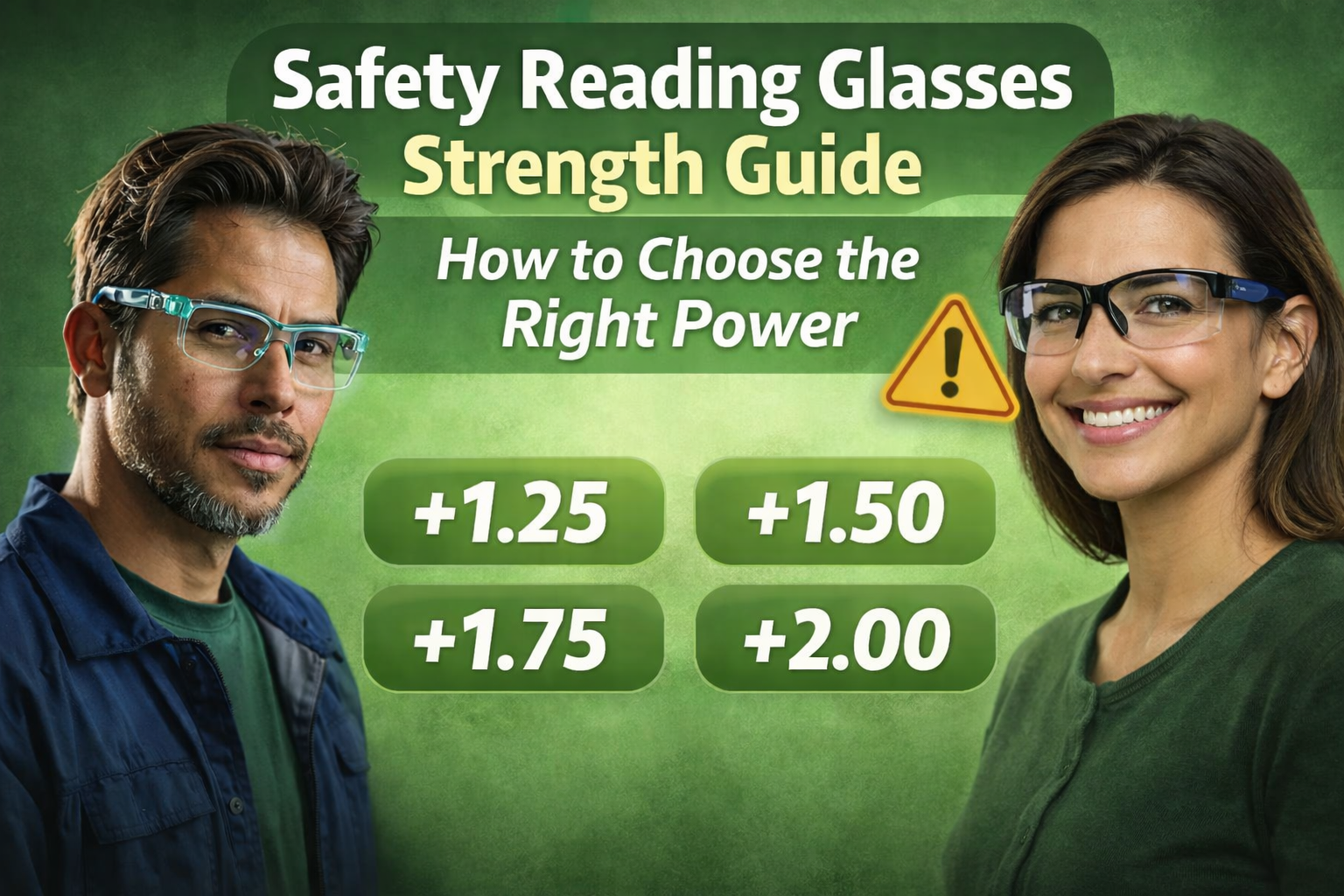
Choosing the wrong reading strength is an instant mood-killer. Too weak and you squint. Too strong and your eyes feel strained, your head aches, and anything at arm’s length looks weird.
Your goal is simple: pick the lowest magnification that makes your normal work distance clear and comfortable. This guide explains how to do that quickly.
Note: this article is general guidance, not medical advice. If you have significant astigmatism, a known eye condition, or persistent headaches, it is safest to consult an eye care professional.
Step 1: Understand reader strength (+1.00, +1.50, +2.00)
Reader power is measured in diopters (the plus number). Higher numbers mean stronger magnification.
Common strength ranges
- +0.75 to +1.00: mild help for early reading needs or light detail
- +1.25 to +1.50: common for standard reading tasks
- +1.75 to +2.00: stronger magnification for more detailed close work
- +2.25 to +3.00: very close work or advanced near-vision changes
Step 2: Match strength to your working distance
The right power depends heavily on how far the task sits from your eyes. Work tasks are not all at the same distance.
- Very close detail (10-14 inches): fine assembly, electronics, tiny parts
- Standard reading (14-18 inches): paperwork, labels, phone use
- Arm’s length (18-24 inches): benches, counters, many screens
If you pick a power that is too strong, it forces you to hold objects closer than feels natural. That gets tiring fast.
Step 3: Use the 3-strength test (fast and reliable)
If you are not sure where to start, test three strengths around your best guess. For example: +1.25, +1.50, and +1.75.
How to choose the winner
- Read or inspect your typical work item for at least 60 seconds.
- Make sure you do not need to lean in unusually close.
- Notice comfort: no tight feeling around the eyes, no dizziness, no headache.
- Pick the lowest power that stays clear at your normal distance.
Step 4: Consider bifocal safety readers for mixed tasks
If you switch between distance and reading throughout the day, bifocal safety readers often feel more natural.
- Top of the lens stays normal for distance awareness
- Bottom segment provides reading power for close detail
- Less distortion when moving around compared to full-lens magnification
Step 5: Signs your strength is wrong
Too weak
- Squinting and eye fatigue
- Leaning in closer than normal
- Detail still looks fuzzy
Too strong
- Headaches or dizziness
- Blur at arm’s length
- Feeling off after a few minutes of use
If you are stuck between two strengths, the lower one is usually the safer starting point for comfort.
When over-the-counter readers are not enough
Over-the-counter readers can work for many people, but prescription safety eyewear may be a better fit if you have different needs in each eye, significant astigmatism, or frequent eye strain that does not improve.
Choose the right power with SafetyEyeGuard
SafetyEyeGuard helps you pick safety readers that match real work conditions: clear at your normal distance, comfortable for long shifts, and built to meet workplace protection needs. Start with your task distance, test a sensible range, and choose the lowest comfortable power for all-day clarity.
FAQs
- What is the most common reader strength? Many people land between +1.25 and +2.00, but the best strength depends on your working distance.
- Is stronger always better? No. Higher magnification can cause headaches and blur at normal distances.
- Should I choose bifocals? If you frequently switch between near and far tasks, bifocal safety readers are often the better experience.