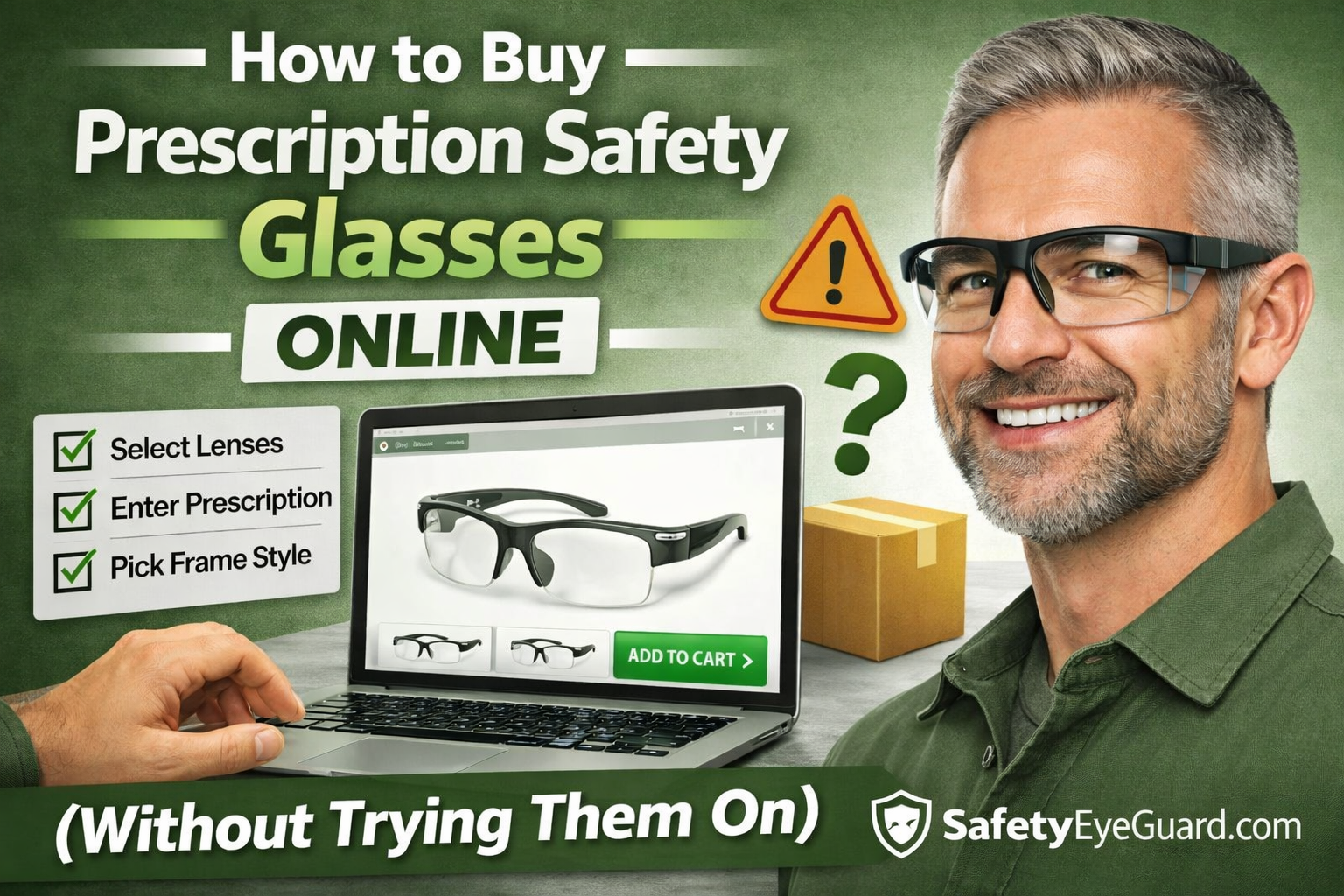
Buying prescription safety glasses online can feel like a leap of faith. You cannot try them on, flex the arms, or check how they sit on your nose before you pay. The good news: you can remove most of the guesswork by using the glasses you already own as a reference.
If you have a pair that fits you well, you can copy the sizing using a few simple measurements and a ruler. This guide shows you exactly how to do it so you can order prescription safety glasses online with confidence.
Step 1: Decode Your Current Glasses (the inside-arm numbers)
Start with your everyday glasses or sunglasses. Look on the inside of the temple arm. You will usually find three numbers that look like this: 54-18-140.
These are standard eyewear measurements used across the industry. When your current pair fits well, these numbers are the fastest path to a similar fit in a new safety frame.
What each number means
- Lens width (54): the horizontal width of one lens at its widest point. It affects coverage and how wide the glasses feel.
- Bridge width (18): the distance between lenses where the frame sits on your nose. Too wide and glasses slide; too narrow and they pinch and leave pressure marks.
- Temple length (140): the length of the arms that reach to your ears. This affects security and whether you feel pressure behind your ears during long shifts.
Practical rule: if your current glasses fit well, look for a safety frame with lens width, bridge width, and temple length within about 2 mm of your current numbers for a very similar feel.
Step 2: Measure total frame width (hinge-to-hinge)
Lens width alone does not tell the full story. Two frames can share the same lens width but fit differently because of hinge placement, frame thickness, and design. Total frame width is what often decides whether a pair feels tight, loose, or balanced.
Frame width size guide
- Small: under 130 mm
- Medium: 130-139 mm
- Large: 140 mm and above
How to measure frame width correctly
- Open your current glasses and place them face down on a flat surface.
- Use a ruler or tape measure.
- Measure from the outer edge of the left hinge to the outer edge of the right hinge.
- Record the measurement in millimeters.
When shopping online, try to match this number to the product specifications. Even a small change can affect comfort over a full workday.
Step 3: Know how safety eyewear fits differently
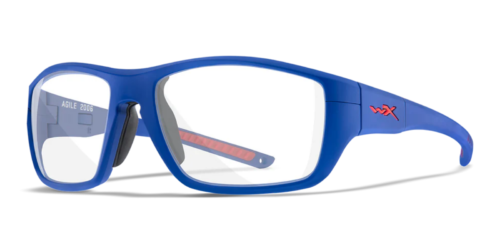
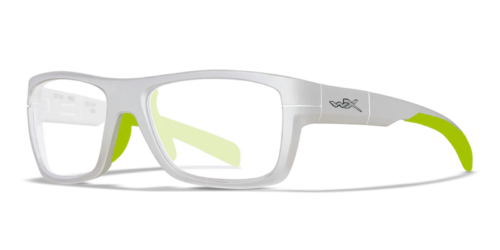
Prescription safety glasses are built for protection first, so they can feel different than everyday eyewear. Understanding the differences helps you choose a frame that is both protective and comfortable.
Common safety-frame differences
- Wrap or semi-wrap designs: these curve around your face for better side coverage and often feel more snug.
- Side shields and thicker temples: extra protection can add bulk and weight compared to regular frames.
- Optional foam gaskets: some frames use gaskets to seal out dust and debris, which can increase facial pressure.
Comfort tip: if your everyday glasses already feel slightly tight, consider choosing a safety frame that is a bit wider, especially for wrap styles or gasket-compatible frames.
Common fit problems and what they usually mean
- My glasses slide down my nose: the bridge may be too wide. Look for a narrower bridge or adjustable nose pads.
- My glasses hurt behind my ears: the temples may be too short or the fit may be too tight. Choose a longer temple length or a wider frame.
- My glasses squeeze my head: the total frame width is likely too narrow. Move up a size category.
- I have a strong prescription: smaller lens widths often help reduce lens thickness and weight. Choose frames compatible with higher prescriptions.
Quick checklist before you order
- Confirm your lens width, bridge width, and temple length (inside-arm numbers).
- Measure hinge-to-hinge frame width and match it as closely as possible.
- Choose features that match your job: side shields, wrap coverage, anti-fog, anti-scratch, and UV protection (if needed).
- Double-check the safety rating required for your workplace (for example, ANSI Z87.1 in many environments).
Order with confidence at SafetyEyeGuard
Once you have your measurements, ordering online becomes straightforward. Compare lens width, bridge width, temple length, and frame width to each product listing, then pick the features that match your work environment (fog resistance, dust protection, indoor or outdoor use).
SafetyEyeGuard offers a wide selection of certified prescription safety eyewear options for different jobs and conditions. Use your current pair as a reference, match your sizing, and choose a frame that protects your eyes and stays comfortable all shift long.
FAQs
- What measurements do I need to buy prescription safety glasses online? Lens width, bridge width, temple length, and hinge-to-hinge frame width are the key numbers.
- Should safety glasses feel tighter than regular glasses? Often yes, especially wrap designs. If you are between sizes, slightly wider can improve comfort.
- How close should my new measurements be? Within about 2 mm is a good starting point for replicating fit.